9 Oct 2026 · 4 min read · Spearfishing
The gun you want is shorter than the gun you think you want. How length, bands and a float line should be chosen for our coast rather than for ambition.
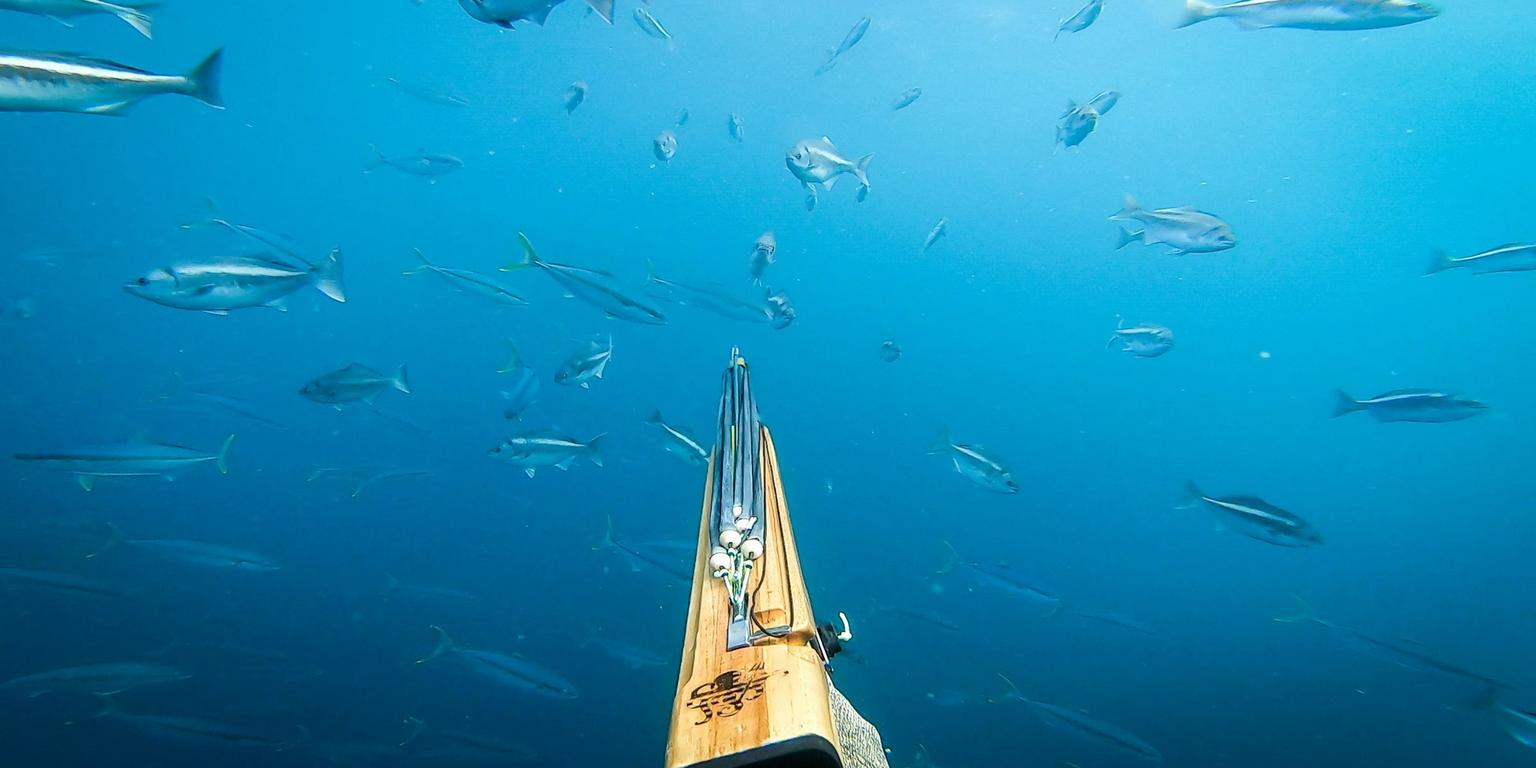
The gun you want is shorter than the gun you think you want. Most people buy their first speargun twenty centimetres too long, find out they cannot swing it along a rocky bottom, and sell it a season later.
Length is about water, not about the size of the fish
Length buys you range and accuracy. It costs you manoeuvrability and loading effort. The right length is set by the water you dive in, not by what you hope to shoot.
- 60–75 cm. Rocks, holes, heavy cover, visibility under five metres, hunting at close range. Quick to turn, easy to load, forgiving of a rushed shot.
- 75–90 cm. The all-rounder for our coast. Rocky shore, eight to fifteen metres of visibility, fish at three to five metres. If you are buying one gun, buy this one.
- 90–110 cm. Open water, drop-offs, better visibility, bigger and more cautious fish. More reach and more accuracy, but noticeably more to carry, turn and load.
- 110 cm and over. Specialist blue-water equipment. Not a first gun.
On the rocky ground along the North Lebanon coast, a 75 or 82 cm gun covers almost everything people actually shoot here. The 100 cm gun comes later, as a second gun, for the days you go looking for something different.
The bands matter more than the gun does
The barrel holds everything in line. The rubber provides all of the power. A modest gun with fresh, correctly sized bands will outshoot an expensive gun with tired ones every time.
- 14 mm rubber. Lighter to load, faster to reload, less recoil. Good for small and medium fish and for divers who take several shots a dive.
- 16 mm rubber. More power and more range, harder to load, more recoil. The standard choice on a mid-length gun here.
- Two 14 mm bands often beat one 16 mm: a smoother pull and a faster shaft, at the cost of a slower reload.
Band length is set by stretch ratio — most setups run about 3.1 to 3.5 times the unstretched length. Too long and you lose power. Too short and you cannot load it safely and you tear the rubber early. If you are not sure, bring the gun in and we will cut and fit them.
Shaft and tip
A 6.5 mm shaft suits guns up to about 90 cm; 7 mm for longer guns or heavier fish. A single flopper is enough for most of what swims here. Threaded tips are worth paying for, because you replace a bent tip rather than a whole shaft, and tips bend often on a rocky bottom.
Reel or float line
A float line and float for most shore diving. The gun stays free in your hands, a good fish cannot take it away from you, and the float marks your position for boats — which, off the Mina, is the part that actually matters.
A reel for tight structure, wrecks and holes where a float line snags, and for divers covering long distances along a shore. It adds weight to the gun and one more thing to rinse and service.
Beginners: float line. Add a reel later if the way you dive asks for one.
What a gun needs around it
A gun on its own is not a kit. You will also need a float with a flag, a float line, a knife on your belt or your leg, and gloves you can load with. Some guns are sold as a full setup for exactly this reason, and buying the pieces separately afterwards usually costs more than buying them together.
Loading, which is where people get hurt
Load in the water, never on land and never in a boat. Point the gun away from anything with a pulse. Keep the butt braced against your chest or hip and keep your hand behind the band as it comes back, never over the muzzle.
Check that the shooting line is clear of the muzzle before every shot. A line wrapped on the muzzle sends the shaft sideways, usually towards whatever you least want it to hit.
Never load a gun with cracked bands, and never hand a loaded gun to anybody. If you are not going to shoot in the next few seconds, unload it.
Before the gun, the diving
Spearfishing is freediving with a distraction. Most of the dangerous moments come from the breath-hold rather than from the gun: a diver fixed on a fish stops counting, pushes the ascent, and blacks out in the last ten metres with nobody watching.
Learn to freedive first. Dive with a buddy who knows the surface protocol, one up and one down, and never dive alone.
Know the rules where you dive, too. No tanks with a speargun, respect closed seasons and minimum sizes, and stay out of protected water — the Palm Islands reserve off Tripoli is a nature reserve, not a hunting ground.
Come in, hold a 75 and a 90, and load both. You will know within a minute which one is yours.
Shop the guide
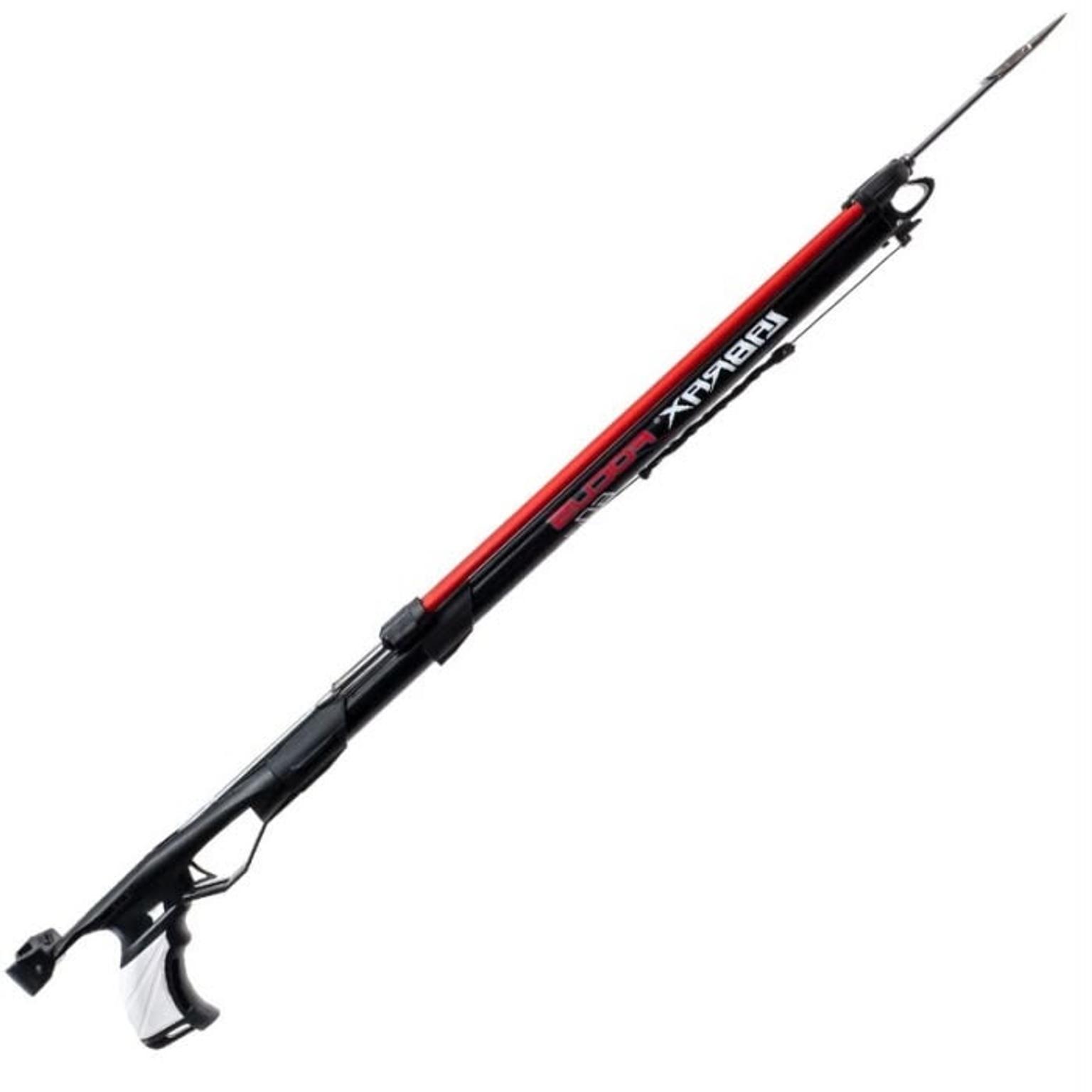
Labrax Focus speargun
60 / 75 cm · Band
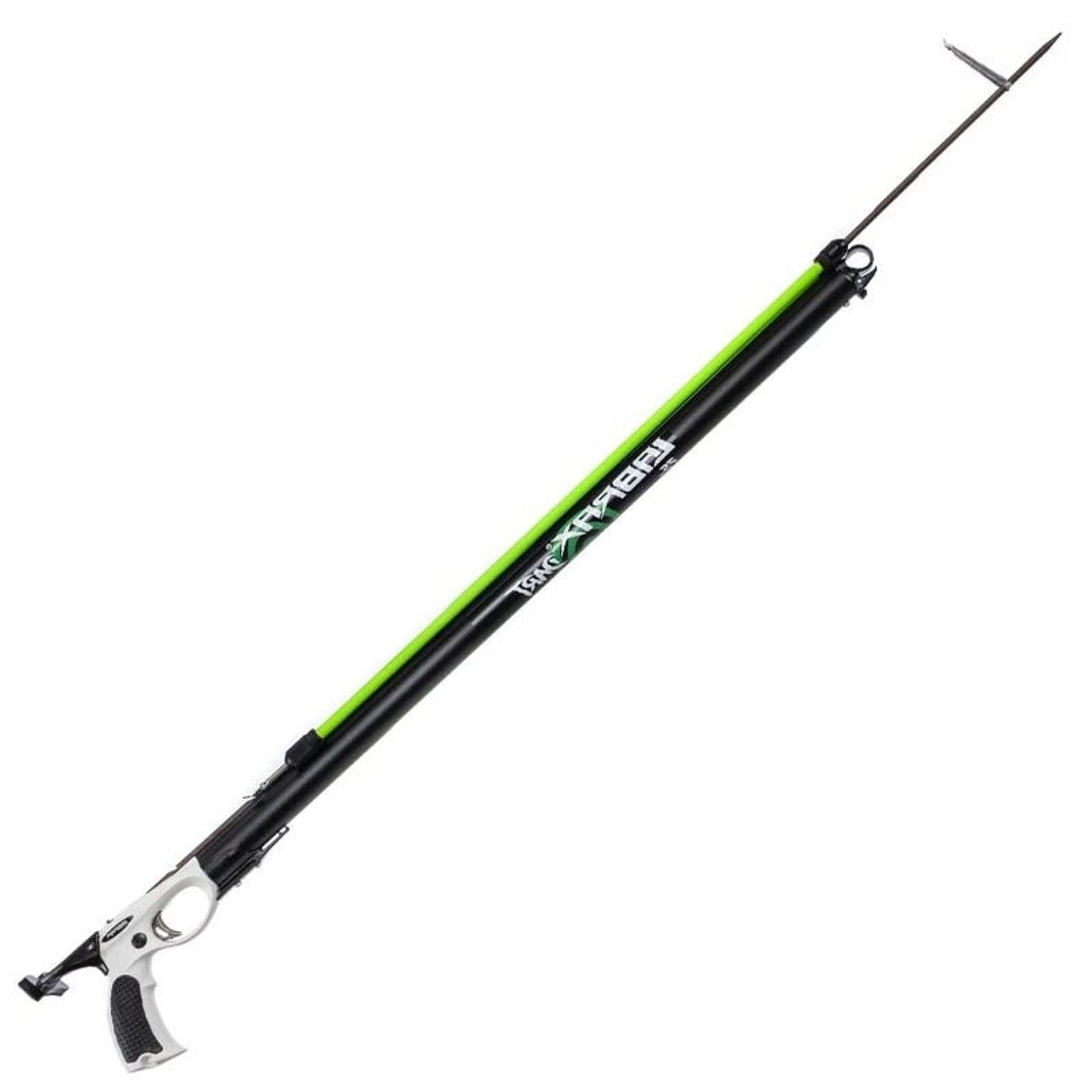
Labrax Dart speargun
60 / 75 cm · Band
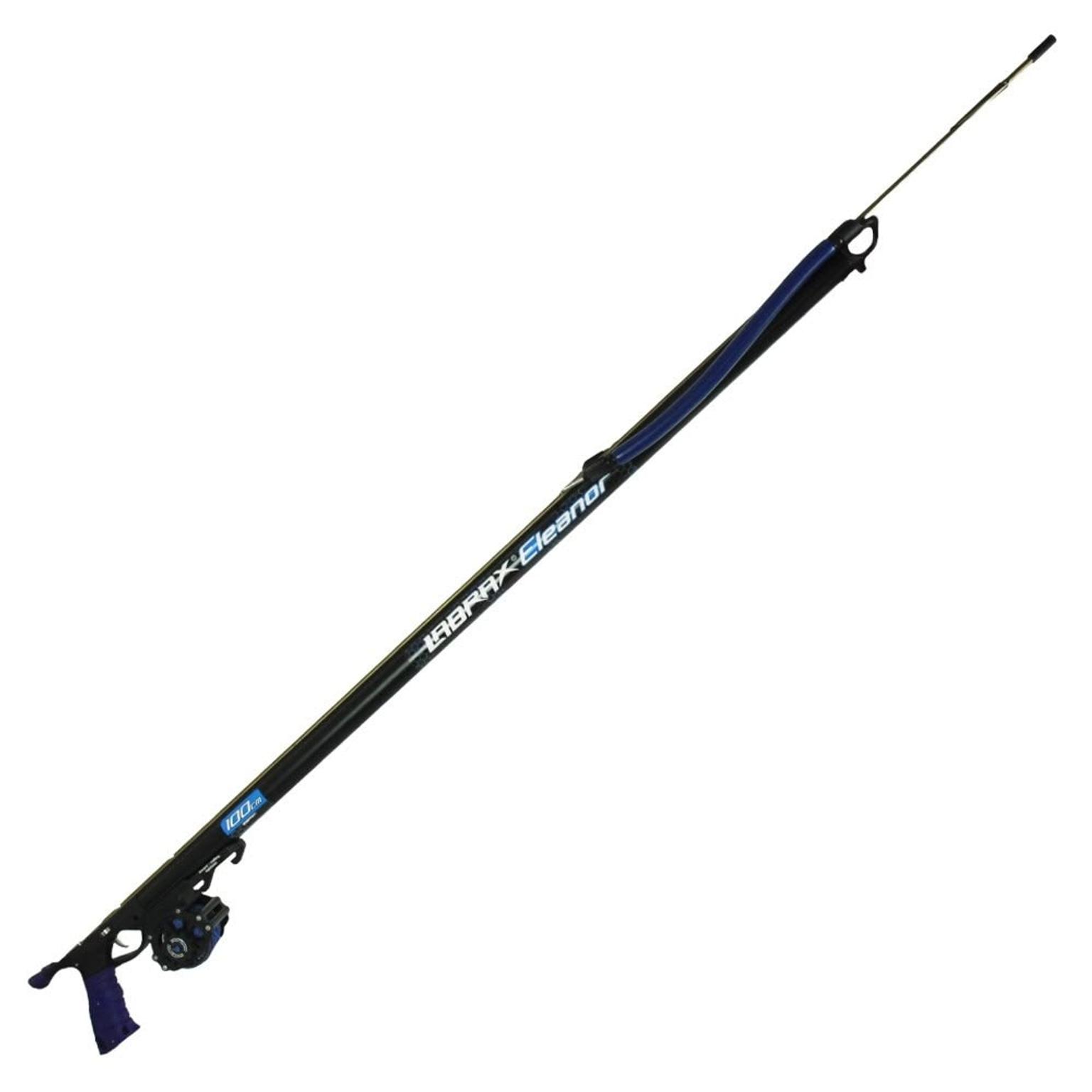
Labrax Eleanor 82 speargun (full setup)
82 cm · Band
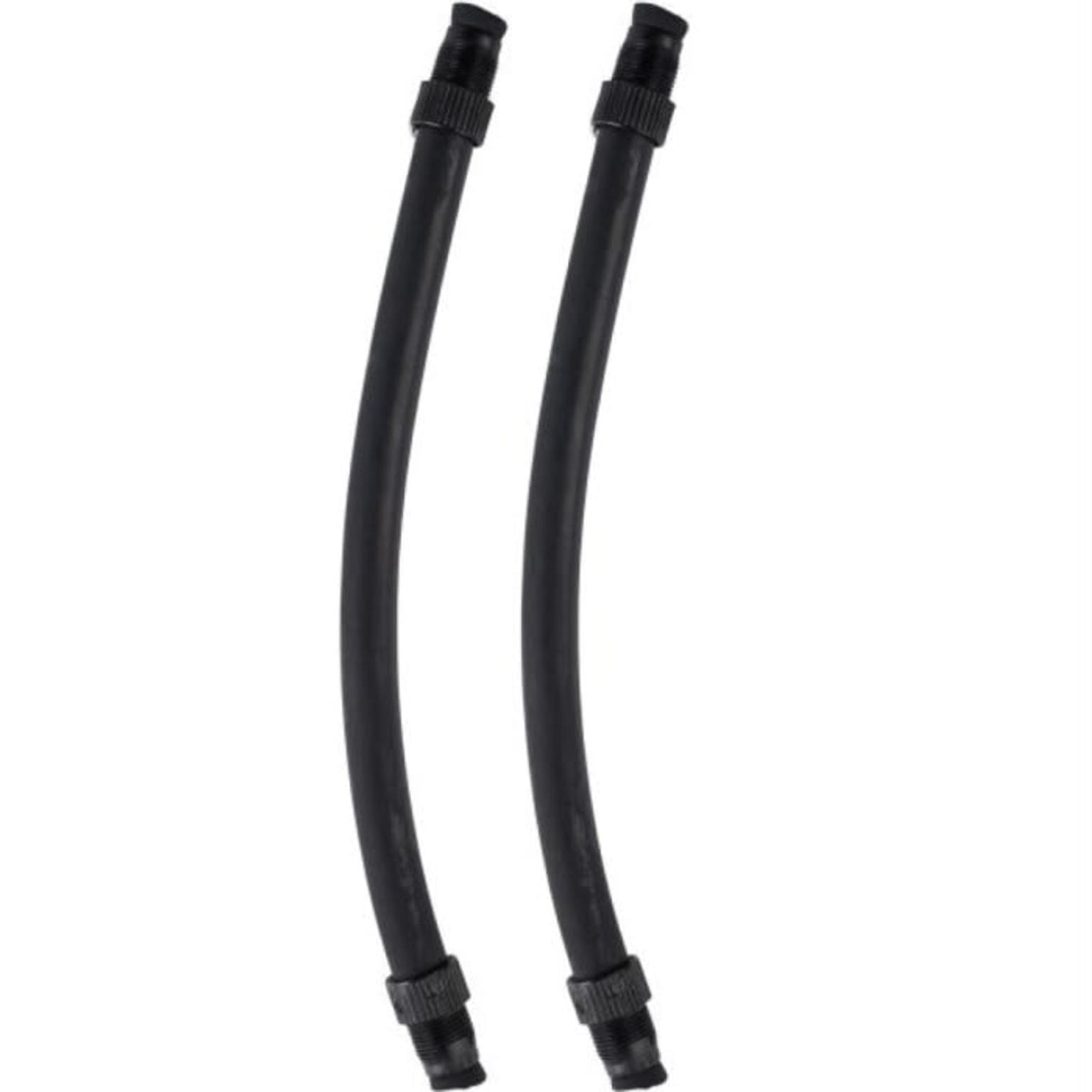
Speargun band 16 mm
16 mm · 13 / 16 / 20 + cm
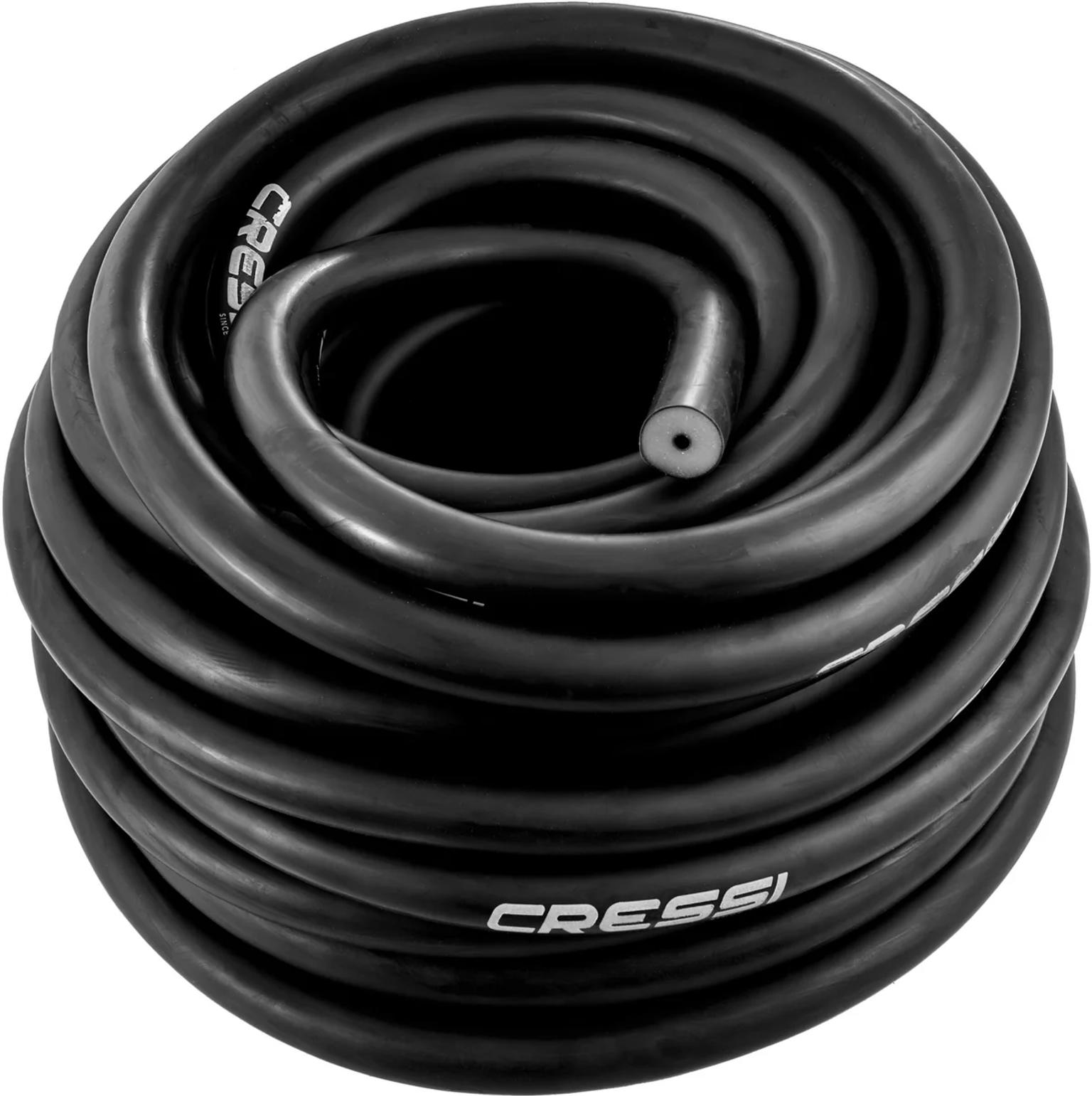
Cressi Pure speargun rubber 14 mm
14 mm · Per metre
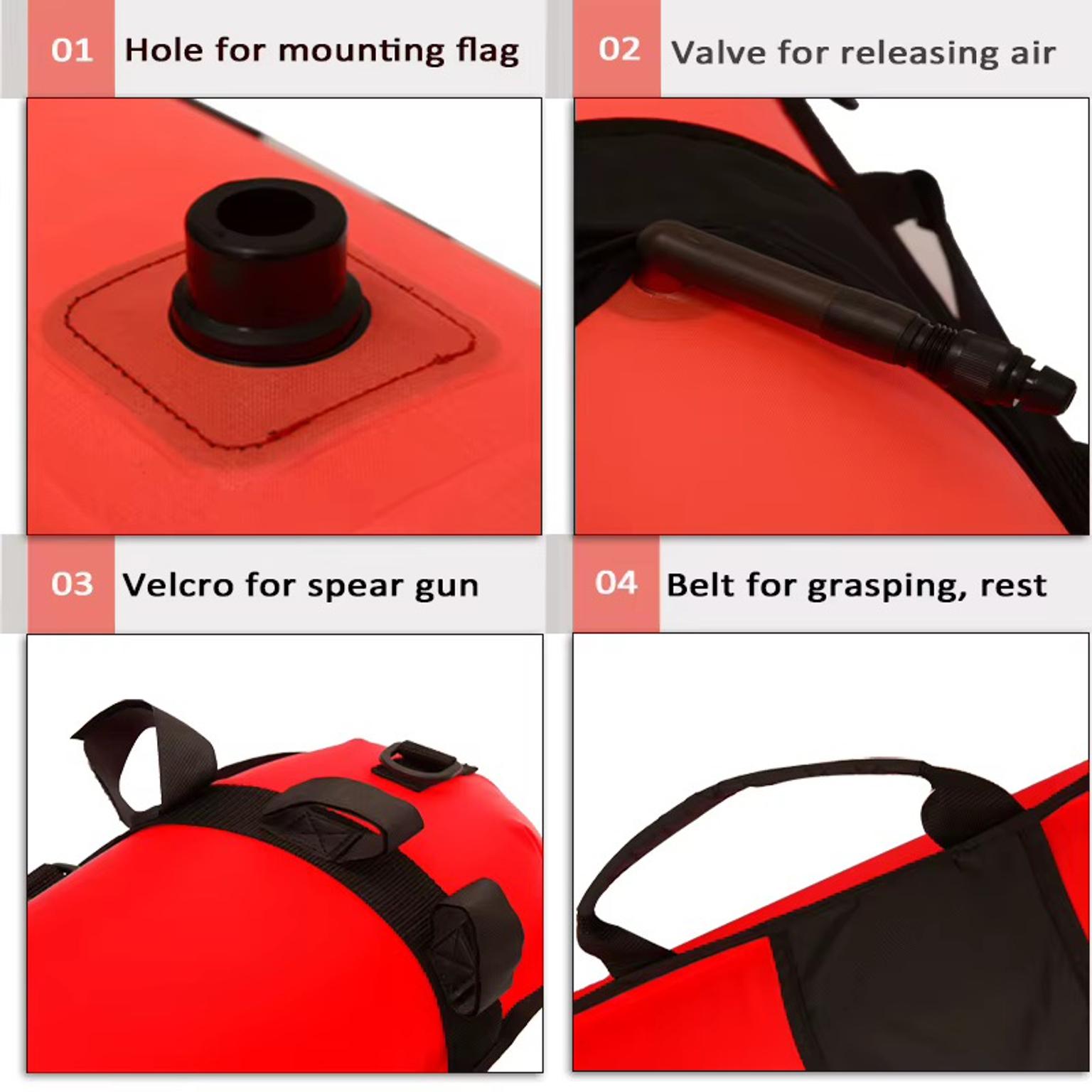
Spearfishing float
Buoy
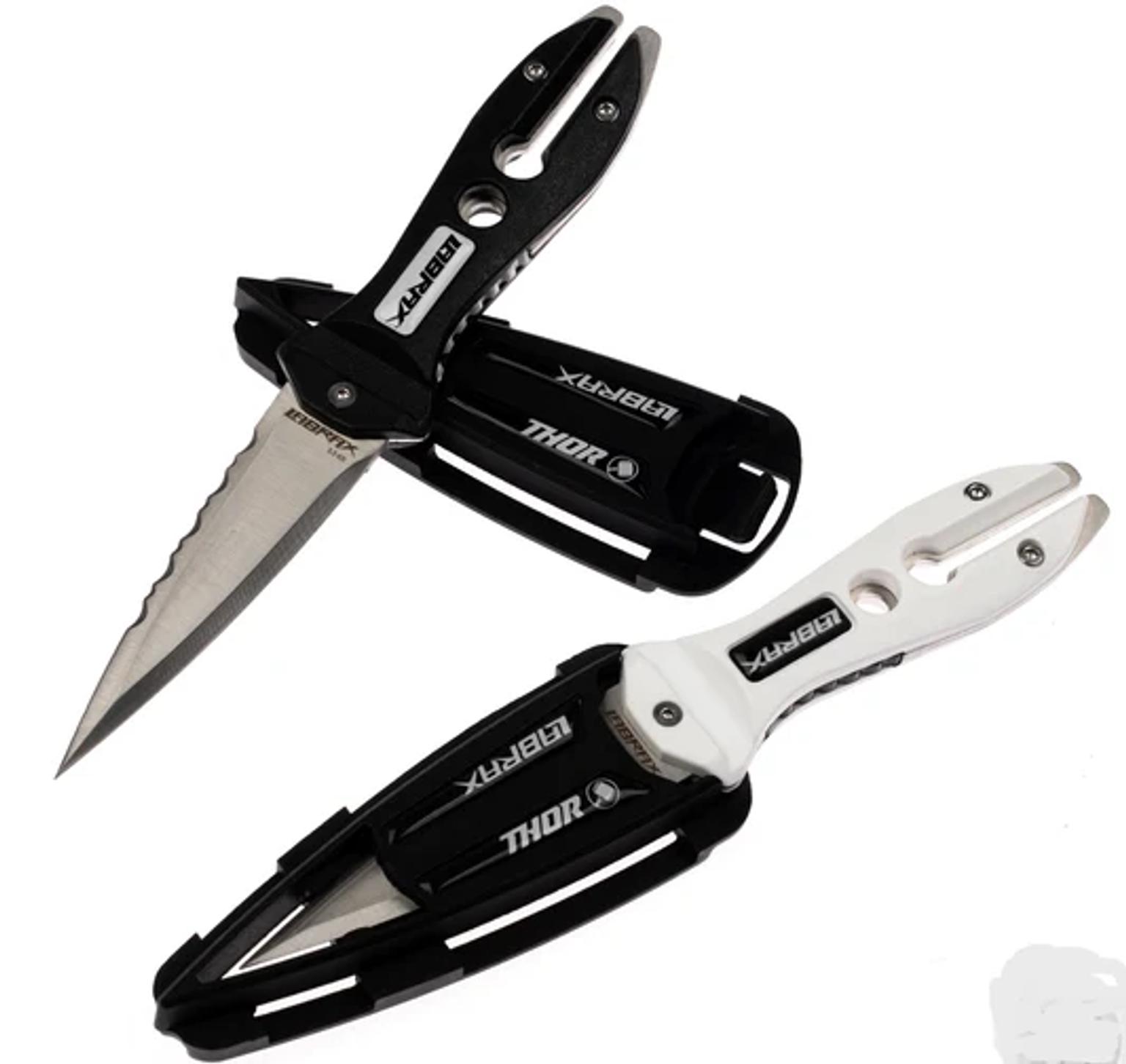
Labrax Thor spearfishing knife
Knife · Black / White