27 Sept 2026 · 5 min read · Freediving · Spearfishing
Nine out of ten divers who stop at ten metres stop because of their ears, not their lungs. The good news is that this is the one part of freediving you can practise on your sofa.
Nine out of ten divers who stop at ten metres stop because of their ears, not their lungs. Equalisation is the only part of freediving that is purely technique, which makes it the part that rewards practice on dry land, on your sofa, for free.
Why it fails at ten metres
Pressure doubles in the first ten metres of water and never doubles that quickly again. By 10 m the air in your lungs, your mask and your middle ears has been squeezed to half the volume it had at the surface.
The method most people arrive with works in the first few metres and then quietly stops delivering air where it is needed. Nothing has gone wrong with your ears. The technique has simply run out of road.
Valsalva is the method you already know
Valsalva is what you do on an aeroplane: pinch the nose and push with the diaphragm and chest, forcing air up out of the lungs. It works at the surface and in the first metres.
Head down and compressed, it stops working, because there is less and less air to push and the airway above your lungs collapses before the air gets to your ears. Pushing harder with the chest at depth is also how divers give themselves a lung squeeze. So Valsalva is not something to do better. It is something to replace.
Frenzel is the technique to learn
Frenzel moves a small amount of air with the tongue and throat instead of the chest. The soft palate and the vocal folds close, trapping air in your mouth and throat, and the back of your tongue acts as a piston that pushes that air into the Eustachian tubes. Your chest does not move at all.
Learn it dry, in this order:
- Find the parts. Say "K" and hold it: that is the back of your tongue sealing against your soft palate. Say "T" and hold it: that is the tip against the roof of your mouth. Learn to feel the difference between closing your nose, closing your throat and closing your mouth.
- Pop your ears with the tongue only. Pinch your nose, puff your cheeks, then without using your chest, push with the back of your tongue until your ears click. Put a hand on your stomach. If it moves, you are still doing Valsalva.
- Change position. Do it lying down, then hanging upside down off the edge of a sofa. Being inverted changes everything, and so does the weight of your own organs on your diaphragm.
- Do it on empty lungs. Exhale passively and then equalise. If you can equalise on empty lungs on dry land, the first twenty metres of a dive will not be what stops you.
Five minutes a day for two weeks will do more for your depth than five dive trips.
In the water
- Early and often. Equalise once before you leave the surface, then roughly every metre, before you feel anything at all. Pressure you can feel is already late.
- Watch your head position. A chin tucked hard onto the chest kinks the Eustachian tubes shut. Keep the neck close to neutral and look down the line rather than at your fins.
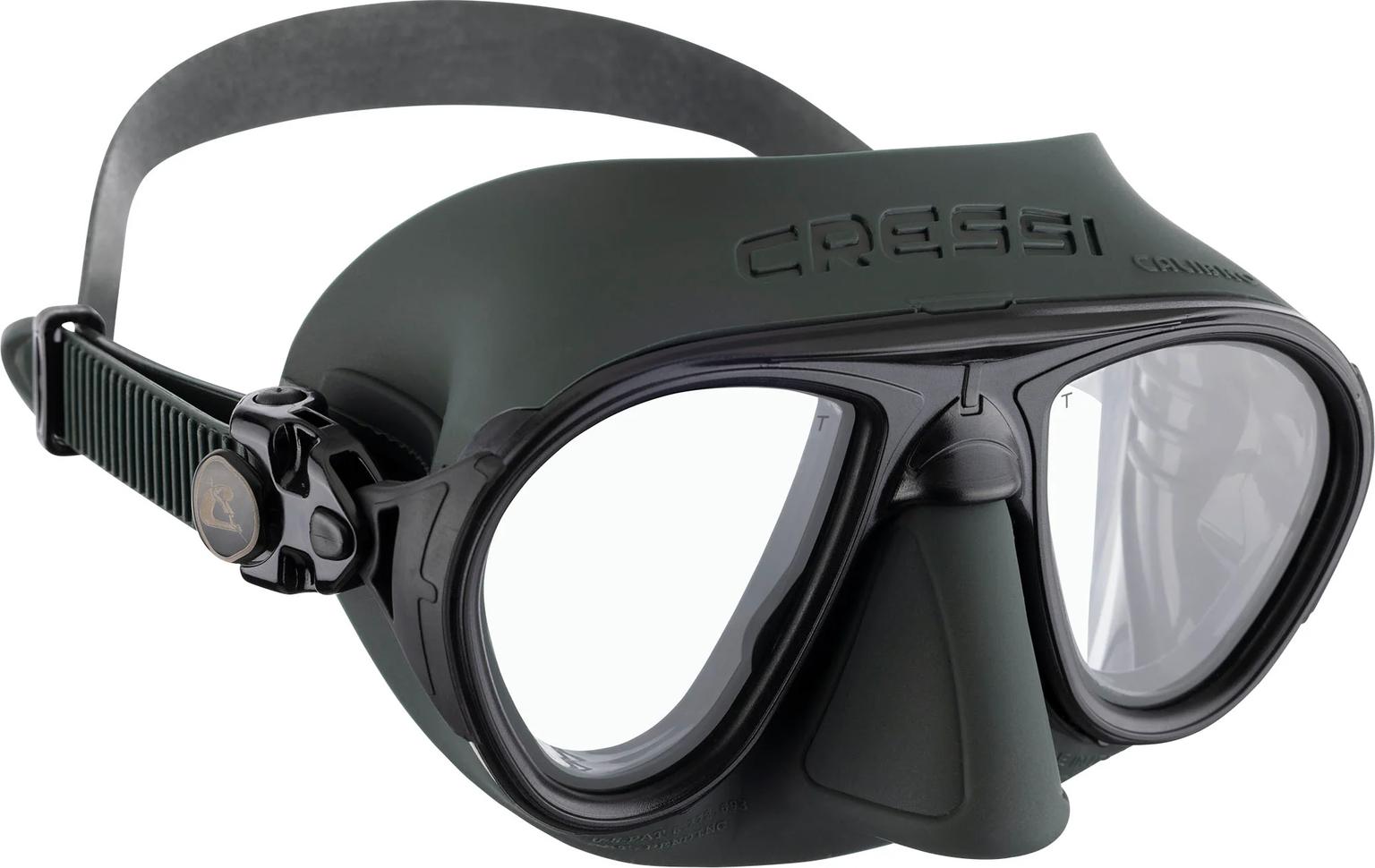
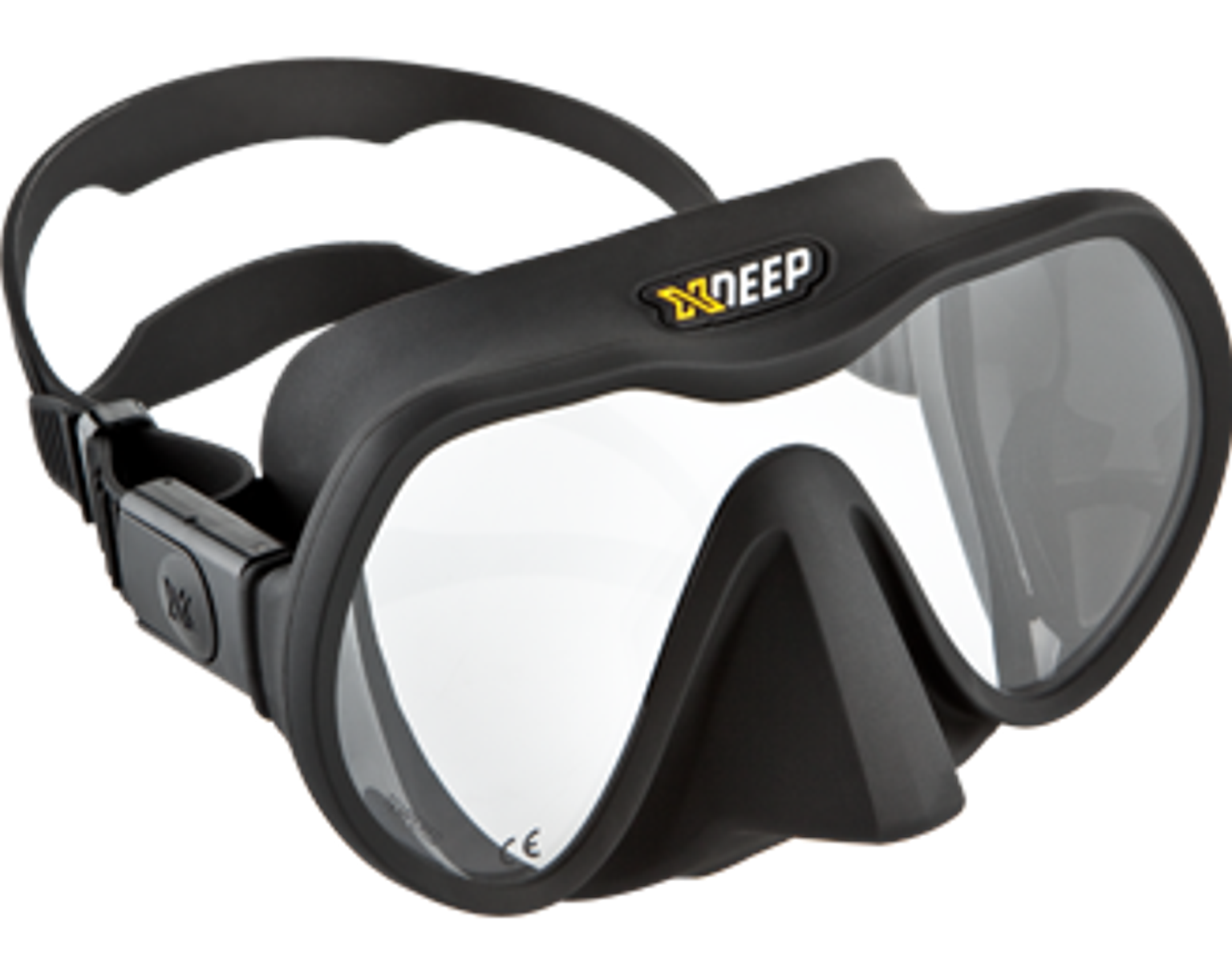
- Equalise the mask too. A little nasal air into the mask every few metres stops it clamping onto your face. This is exactly why a low-volume mask matters: a big mask eats the air you wanted for your ears.
- Go slowly through the first ten metres. That is where the pressure change is steepest and where almost every equalisation problem begins.
- If an ear will not clear, stop, come up a metre, try once more gently, and if it still will not clear, end the dive.
Never force it
Pushing on a blocked ear does not open it. It drives pressure into the middle ear and from there into the inner ear, and the price list runs from a few days of pain to a perforated eardrum to permanent hearing loss and vertigo. No dive is worth any of that.
The same goes for decongestant sprays used to dive through a cold. They wear off at depth, and you surface into a reverse block, which is worse than the dive you were trying not to miss. If you are congested, you are not diving today.
What is usually actually wrong
- Descending too fast through the first ten metres.
- Chin tucked into the chest.
- Still equalising with the chest without realising it.
- Dehydration, and for some people dairy before a dive, thickening mucus.
- A mask strap so tight it pulls the skirt into the face and changes the pressure on the nose.
- An ear infection, or an old perforation nobody has looked at. That is a doctor, not a forum.
Past thirty metres there is another technique
Below roughly 30 m there is no longer enough air left in the lungs to resupply the mouth and throat, so divers charge their mouth with air at depth and spend it on the way down. This is called mouthfill. It is a real technique, it is difficult, and it belongs in a course with a coach watching you, not in an article.
Get to 30 m comfortably on Frenzel first. For most people that is a year or more of diving, and that is exactly as it should be.
Learn Frenzel dry, this month, before you buy anything else. It is free, and it is the one piece of equipment nobody can sell you.
Shop the guide
Elite Micromask
Mask · Micro
Cressi Calibro mask
Mask · Low
xDeep Radical frameless mask
Mask · Low
Sizes: S L
Freediving float
Buoy